If you want more organic customers for your cleaning business, there is 1 thing you need to do:
Get more reviews (on your Google business profile ideally).
Getting more reviews comes down to not only doing a good job, but asking for them in the right way and at the right time.
Here are the 7 most important things to keep in mind when designing a review request system that maximizes good reviews. Get those three right, and your review count grows on autopilot.
7 Ways to Get More Reviews for Your Cleaning Business
Do as many of these that you can as long as they apply to your specific cleaning service model. It’s okay if you can’t do them all.
1. Ask at the Right Moment
Happy customers wave your team off, get on with their day, and never open Google again. Frustrated ones always find the time. The fix is simple: ask while the impression is still fresh.
The sweet spot is 30 minutes to 2 hours post-service, when the house is still sparkling and the customer is still riding that clean-house high. A direct text with a Google review link sent right after job completion removes every excuse not to leave one. Make it stupid-easy and the response rate shoots up.
If the client doesn’t get home until the evening, send the follow-up later that evening. It’s not hard to track if they were home or not during the service itself.
2. Automate Your Follow-Up
One automated message isn't a system. But one automated message followed by a polite nudge 3-5 days later? That's a system. Set it up once and it runs without you.
Tools like CleanSlot handle job completion tracking automatically, so you can trigger a review request the moment a job is marked done, without relying on your team to remember.
That kind of tight integration between scheduling and follow-up is what separates businesses that get 12 reviews a year from ones that get 12 a month. Send a follow-up if you don't hear back. One reminder is acceptable.
But don’t be too aggressive: Three follow-ups is too much in most cases and could lead to negative reviews.
3. Train Your Team to Ask In Person
Your cleaners are the face of your business. They're standing in the customer's kitchen when the job wraps up. That's the most powerful review-generating moment you have, and most owners completely waste it.
Coach your team to say something simple before they leave: "Thanks so much, it was great cleaning for you today. If you're happy with everything, a Google review would mean a lot to us." No pressure, no awkwardness. Customers are far more likely to follow through when a human asks them directly than when they get a generic automated email two days later.
Use both. The human ask first, the automated message as backup.
Another great tactic is to leave a link to a feedback form online, which can naturally lead to a review request if the feedback is good.
4. Prioritize Google Above Everything Else
Most residential cleaning customers default to Google. It's visible, trusted, and it directly impacts your local search ranking. Facebook and Yelp matter too, but if you're spreading your energy, start with Google. Get 20 solid reviews there before worrying about anywhere else.
Give your team a short direct link to your Google review page that they can text customers on the spot. Save it somewhere they can access it in two taps. The easier you make it for your team to share, the more often it actually happens.
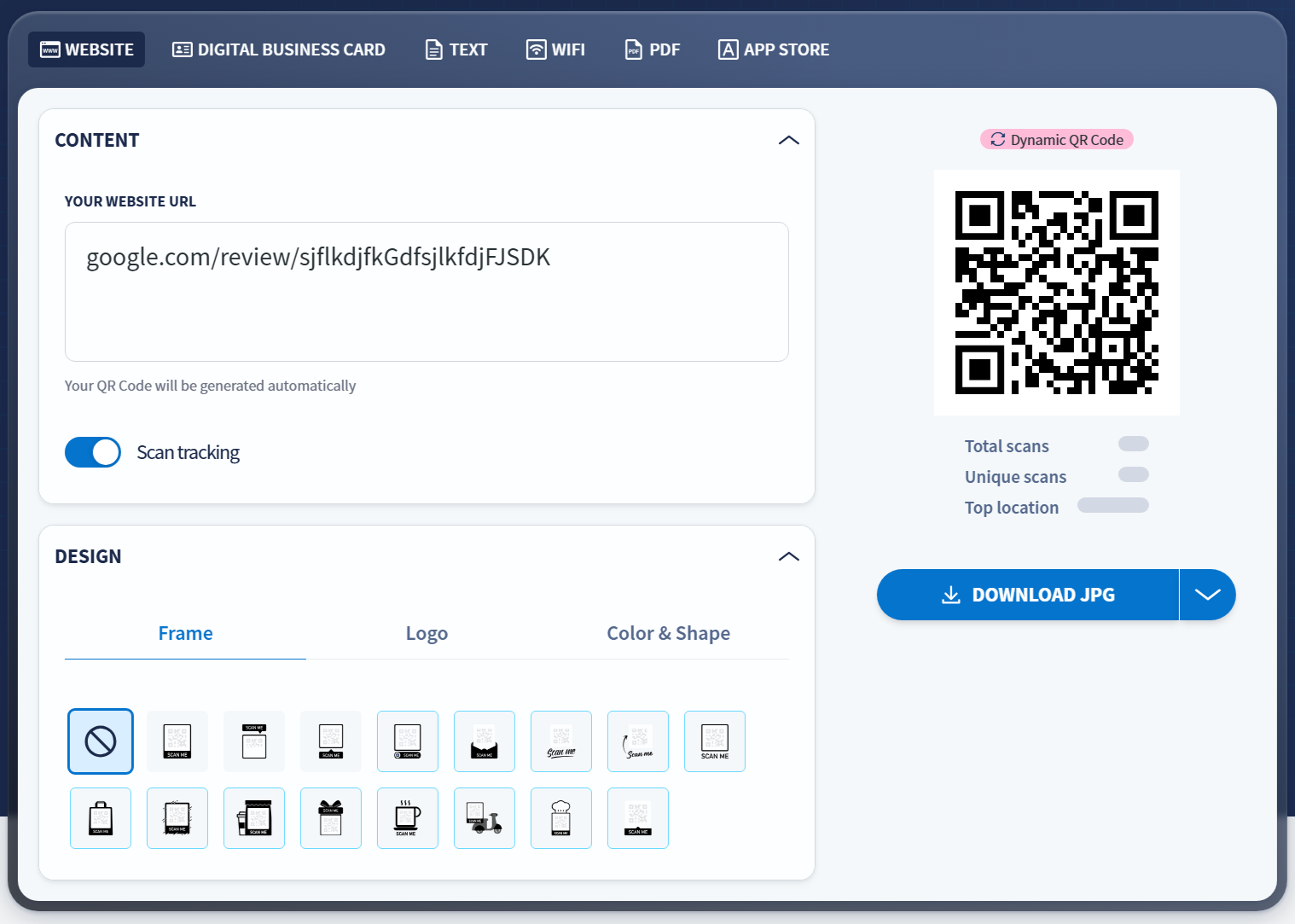
Pro tip: you can generate a QR code that links to your review or feedback page if you leave some sort of flyer or feedback request form. There are many free online QR code generators.
5. Target Your Recurring Customers
Recurring customers are your most reliable source of reviews. They've seen your work repeatedly and have the clearest sense of your consistency and quality. They're also the easiest to reach because they already know and trust you.
Don't ask on the first visit. You haven't earned it yet. By the third or fourth clean, a happy recurring customer has real experience to write about. That's when the ask lands best, and that's when reviews come out specific and credible rather than vague.
Annual milestones are also gold: "It's been a year since we started cleaning your home. If you've been happy, we'd be so grateful for a Google review." Customers respond to acknowledgment.
6. Personalize Every Request
"Dear Valued Customer" is an immediate delete. Use the customer's name, reference the actual job, and make it feel like a message from a real person, not a marketing drip campaign.
Something like: "Hi Maria, thanks for booking with us today. If you're happy with how everything looks, we'd really appreciate a quick Google review: (link)." That's it. No essay, no guilt trip. Specific beats generic every single time.
7. Respond to Every Review You Get
Here's one most people miss. Responding to reviews is part of getting more of them. A business with 50 reviews and zero responses looks arrogant. Responding to every review, good and bad, signals to future customers that there's a real person behind the business, and it signals to potential reviewers that their words won't disappear into a void.
Keep positive responses short and warm. Keep negative ones professional and solution-oriented. Both matter. Set a rule: every new review gets a response within 48 hours. It takes minutes and compounds over time.
Common Mistakes That Kill Your Review Count
You're probably making at least one of these.
-
Asking everyone at once. A batch review request sent to your entire customer list looks desperate and generates almost no response. Stagger your asks and keep them personal.
-
Incentivizing reviews with discounts. Google explicitly prohibits it and can penalize your listing. Beyond the policy issue, it skews your reviews and attracts the wrong customers. Earn them honestly.
-
Only going after happy customers. If your review request only goes out when you think the job went well, you're capping your volume. Build a system that asks after every job, then let the customers decide. You can encourage feedback for any jobs that didn’t go perfectly and improve your business processes.
-
Letting your team forget. If getting reviews relies on someone remembering to ask, it won't happen consistently. Automate what you can and build the in-person ask into your job completion checklist.
How to Handle Negative Reviews Without Losing Your Mind
You're going to get a bad review at some point. A cleaner had an off day, a customer had unrealistic expectations, someone just wanted to vent. It happens to every business.
Write your response, then wait 24 hours before posting it. The responses that go viral for the wrong reasons are always the ones written in the heat of the moment. Once you've cooled off, use this formula: acknowledge, apologize, act. "Hi (Name), we're sorry your experience didn't meet your expectations. We'd love the chance to make it right. Please reach out to us at (email) and we'll sort it out."
Potential customers understand that some people are unreasonable or that cleaners can have an off-day here and there. As long as you appear professional and have a good overall review, it won’t affect getting new business if you have a few negative ones.
Key Takeaways
Getting more reviews isn't about luck or charm. It's about having a repeatable system. Start here:
-
Set up a direct Google review link your team can text customers right after every job.
-
Automate your post-job follow-up so requests go out within two hours of completion.
-
Coach your team to ask in person at the end of each clean.
-
Respond to every review, positive or negative, within 48 hours.
-
Track your monthly review count and treat it like any other business metric.
Do these five things consistently for 90 days and you’ll see big improvements in your Google listing and the number of new customers you get.