Most cleaning businesses treat recurring appointments like an afterthought. Get the first booking, do decent work, vaguely hope the client calls back. That's not a recurring revenue strategy. That's just waiting and calling it a business.
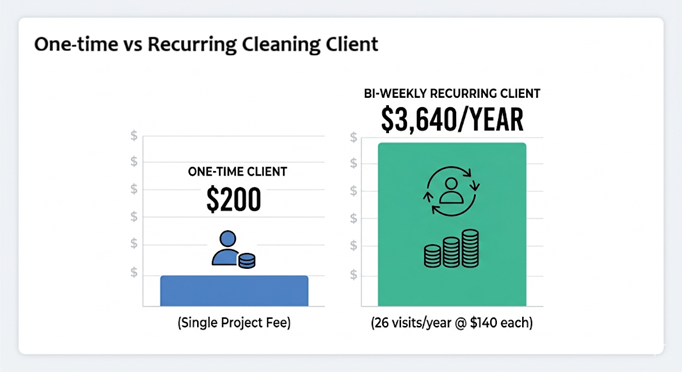
A client who books bi-weekly is worth thousands a year. Run 20 recurring clients alongside your one-time work and you have predictable revenue, a filled calendar, and a business that doesn't crater every slow season.
The acquisition cost for that recurring client gets amortized across every visit they ever book. In other words, new customers are far more expensive than the one you’ve already spent your resources gaining.
Why Recurring Clients Are Your Most Valuable Asset
A recurring client costs you almost nothing to retain once they're in the system, and they're easier to serve on every visit: you know the layout, the pets, the problem areas, the lockbox code.
That operational familiarity adds up fast in reduced time-per-visit and fewer callback complaints.
The cleaning businesses that dominate residential markets don't win on price or volume of new leads. They win by keeping clients longer than everyone else.
How to Structure Recurring Bookings So They Don't Fall Apart
The most common version of this failure: a client says "see you in two weeks," you both agree, and three weeks later you realize nothing was ever actually confirmed.
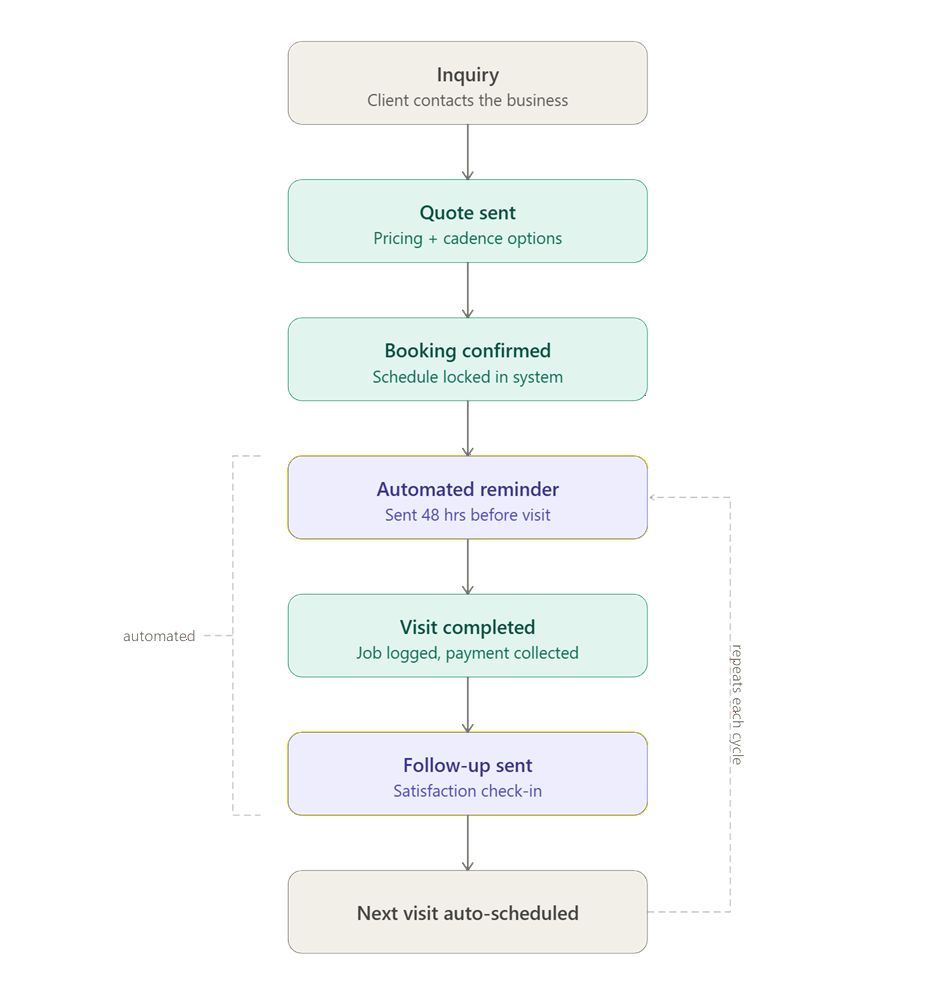
Verbal commitments are not bookings. Without a formal confirmation in a system both parties can see, recurring appointments drift, get forgotten, and disappear.
Match Frequency to Client Type (and Price Accordingly)
Not all recurring schedules are equal. Each cadence serves a different household type and carries different retention risk:
-
Weekly clients are your highest-value relationships. Price slightly below your bi-weekly rate per visit to reward the commitment. These clients are also the most likely to refer and least likely to cancel.
-
Bi-weekly is the residential sweet spot. Frequent enough to maintain real cleanliness standards, affordable enough that clients don't second-guess it every month.
-
Monthly clients are worth having but shouldn't anchor your schedule. Cancellation rates are higher, and the gaps mean every visit is effectively a reset rather than maintenance.
Automate Confirmation and Reminders
A recurring appointment isn't locked in until the client has a confirmation in their inbox and a reminder coming before each visit. Set it up once and let it run.
Tools like CleanSlot handle the entire booking and reminder loop automatically, so you're not chasing confirmations by text or losing jobs because someone forgot.
Stop Discounting Recurring Work. Sell the Priority Slot Instead.
There's a dumb, persistent idea in service businesses that you earn recurring clients by discounting aggressively. You don't. Most clients who book recurring cleaning aren't looking for the cheapest rate. They're buying certainty: the same team, the same time, every visit, no coordination overhead on their end.
That reframe matters because it changes what you're selling. A 5-10% discount off your standard rate is a reasonable incentive to commit, but the pitch shouldn't lead with the savings.
It should lead with reliability: "Lock in your slot now, same team every time, we handle reminders and scheduling automatically." That's worth more to a busy household than $15 off.
What Actually Kills Recurring Client Retention (And How to Fix It)
Getting a recurring client is step one. Keeping them through price increases, schedule disruptions, and the inevitable "we're renovating for six weeks" situations is where most businesses lose them.
The failure modes are consistent:
-
Drifting schedules without reconfirmation. If a recurring booking isn't locked in a system with automatic reminders, it will eventually fall apart. One skipped week becomes two, and then the client has quietly moved on without saying anything.
-
Ignoring small complaints. A client who mentions the same issue twice and gets no response doesn't complain a third time. They just quietly stop booking. The fix is a simple follow-up after the first few visits, explicitly asking if anything needs adjustment. The customer isn’t always right, but these are your most important customers so they are worth a bit of extra effort and diligence.
-
Rotating staff without explanation. Recurring clients form a relationship with specific cleaners. Constantly swapping teams without notice damages trust faster than a missed spot ever would. If you have to change, communicate it proactively.
-
Letting pricing stay frozen out of conflict avoidance. Underpriced recurring clients breed resentment. Give 30 days written notice, keep the explanation brief ("our rates are increasing from X to Y on (date)"), and move on. Most long-term clients expect periodic increases. Most owners wait far too long to make them.
Build a Pause Policy Before You Need One
Clients will pause service for vacations, renovations, houseguests, and a dozen other reasons. Have a written policy ready: you'll hold their regular slot for up to four weeks.
Beyond that, the slot goes back into your schedule and they rebook when they're ready. State it clearly during onboarding so there's no awkward negotiation when it happens.
Reactivate Lapsed Clients Before Chasing New Ones
Someone who used your service three to six months ago and stopped is a dramatically warmer lead than a cold inquiry.
A simple, direct message ("Hey, we haven't seen you in a while. Want to get back on the schedule?") with an easy rebooking link converts at a significantly higher rate than most marketing.
Most owners never send it. If you have a list of lapsed clients sitting in your system, that's the first place to look for new recurring revenue.
Your Next Steps
The system isn't complicated. The discipline is.
-
Audit your client list this week: who has booked more than twice but isn't on a recurring schedule? That's your first outreach list.
-
Set up automated confirmations and reminders so recurring bookings run without manual follow-up.
-
Write your price increase and pause policy now, before you need them.
-
If you're still managing recurring bookings through texts and memory, fix that first. CleanSlot was built specifically for this: recurring job tracking, automated reminders, and scheduling that doesn't require you to be the system.
Recurring appointments for cleaning clients are the foundation of a cleaning business that compounds. Every retained client is revenue you didn't have to re-earn.